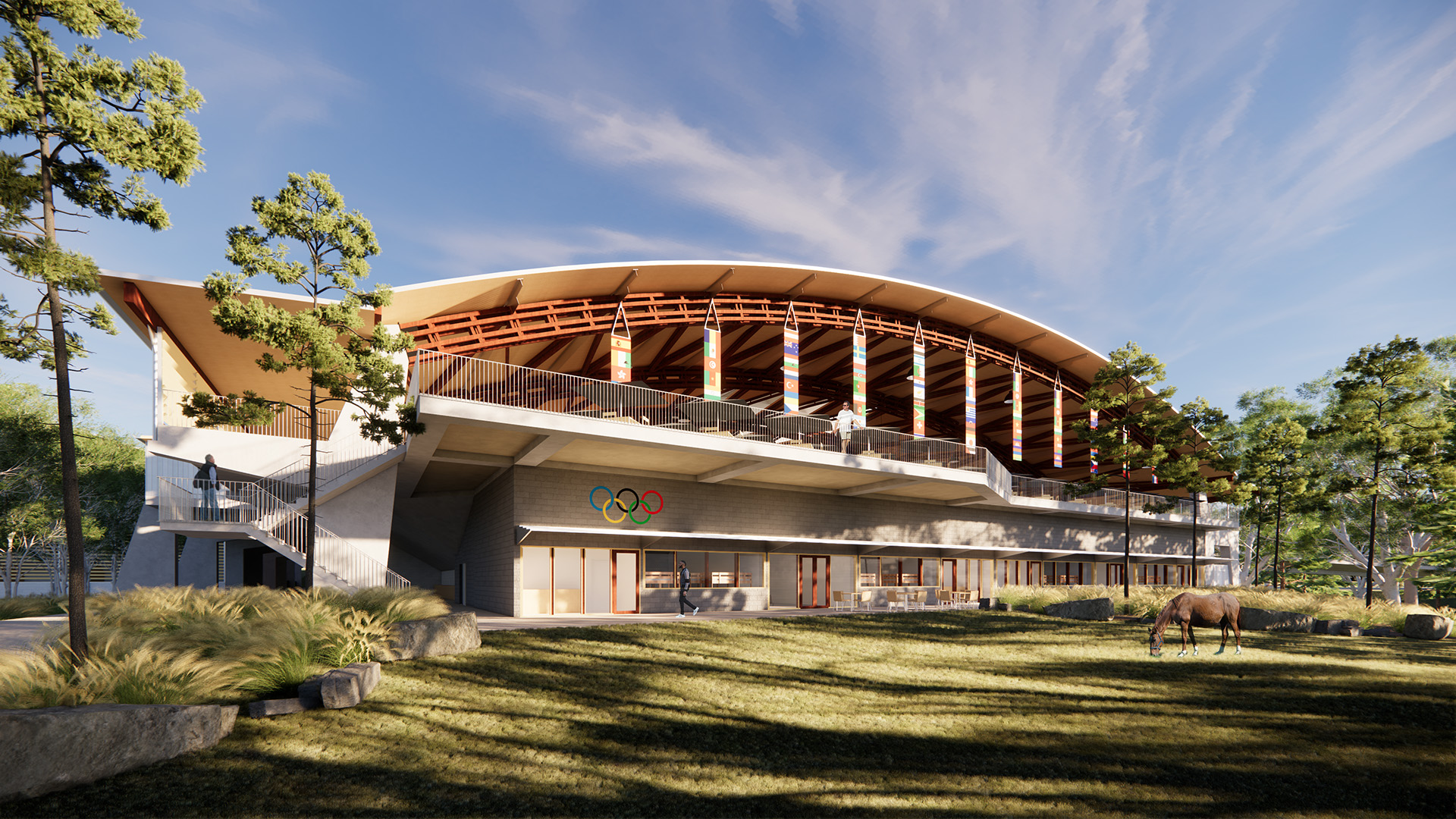
Laidley Equestrian Centre
This scheme is a reaction against contemporary regional building processes that see rural areas as having excessive space. The scheme proposes no changes to any part of the site west of the lagoon (with the exception of minor upgrades to existing landscaping and amenities), as a way of preserving an important community asset and an important ecological hub. Resultingly, the architectural response is a two level equestrian centre on the site’s already cleared eastern segment. By approaching the site as a scare resource, Laidley, the surrounding urban settlements, Queenslanders and the non human resident’s of the site benefit from:
- The preservation of a delicate edge and one of the few genuine greenspaces within Laidley, thus ensuring refuge for local wildlife, the conservation of culturally significant bunya pines and the chance of propagating a model of urban repair.
- The retention of an important park that serves as a driver reviver, place for exercise + gathering and a pleasant place to have your lunch (especially important if you’re a council worker).
- A brand new equestrian centre!
Ideologically, the scheme attempts to understand Indigenous Landscape pre colonisation, where land was cared for via a stewardship process that involved land custodianship and careful and effective management of key resources. Key landscape within and adjacent to the site were:
- Fringing Forests / aracurian scrubs (softwoods)
- Eucalyptus Forests / Blue Gum Woodlands (hardwoods)
- Brigalow + Dry Scrub
- Semi-Green Vine thickets
Fragmented landscapes emerged as a result of colonial arrival. Indigenous landscape were cleared for grazing and construction timber. A rich timber tradition emerges in Queensland, but at the cost of a delicate ecosystem and relations between the Traditional and Original Land Custodians and Settlers / Colonialists. The site and its surrounds must be understood as a complex site of conflict and cultural clashing - Multuggerah + The Battle of One Tree Hill being one of many examples - and therefore the proposed intervention must act as a method of repair and healing.
We are now facing the consequences of fragmenting this landscape as the erosion of this Indigenous landscape has brought deadly environmental results. The absence of water retaining vegetation has left low-lying Laidley extremely vulnerable to flooding - Laidley is now an urban island floating within a sea of monocultural agricultural floodplains. Additionally, Laidley’s colonial grid awkwardly turns it inward and away from Rosewood Scrub’s cultural history and the language and ecosystems of the Moreton Bay Hinterlands. To what extent is this environmental and cultural damage reversible?