Optimising Ecological Performance in High-Density Social Housing Using the BCC Green Factor Tool
This research explores how green infrastructure can transform the environmental performance of high-density social housing in Brisbane’s subtropical context. Using the Curwen Terrace development as a living laboratory, the project investigates how layered nature-based solutions—such as green roofs, rain gardens, and climbing façades—can collectively shape healthier, cooler, and more resilient communities.
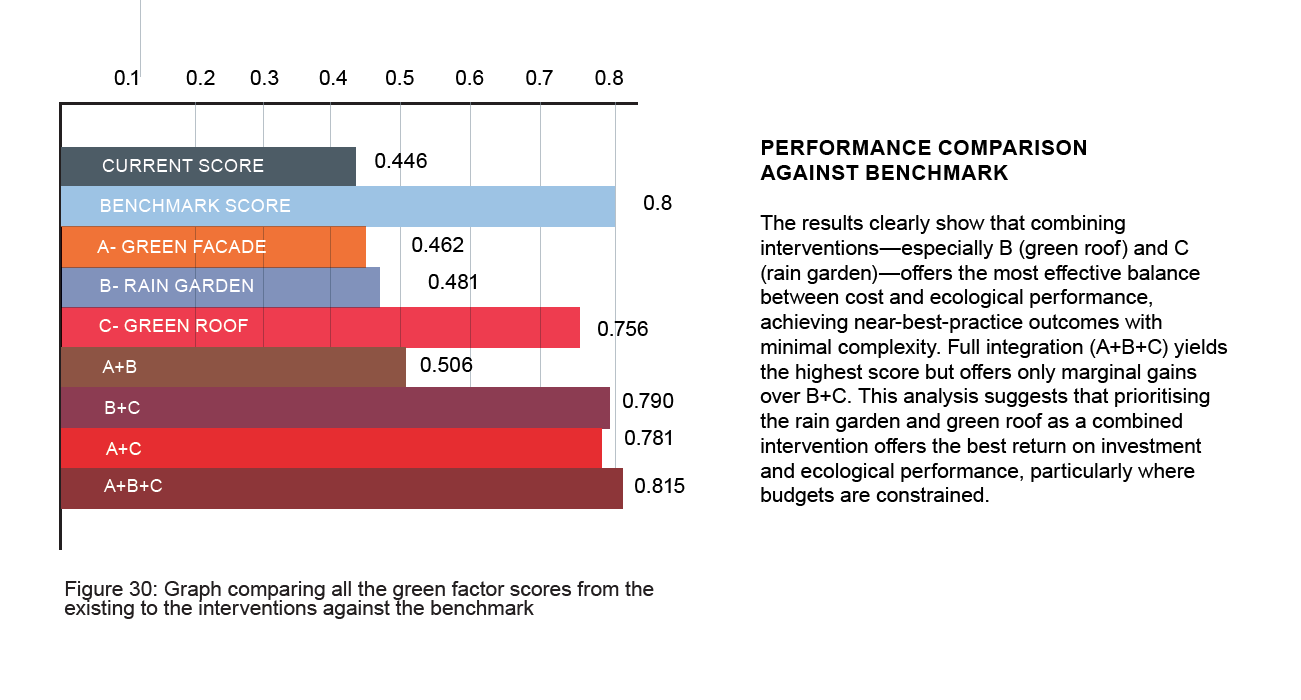
Through an analytical application of the Brisbane City Council Green Factor Tool, the study reveals that the greatest ecological benefits emerge not from any single intervention, but from the integration of multiple systems working together. The research demonstrates how thoughtful combinations of vertical, rooftop, and ground-level greening can improve stormwater performance, reduce urban heat, enhance biodiversity, and elevate the everyday experience of residents.
More than a technical exercise, this project positions environmental performance as a pathway to social equity. It highlights how sustainable design can be made accessible, feasible, and adaptable for public housing providers operating within real-world constraints. The resulting framework offers a replicable model for future developments across Brisbane’s rapidly densifying suburbs, showing how urban design can lead the transition toward greener, more liveable, and climate-responsive neighbourhoods.